


Earn your Auburn master's degree online

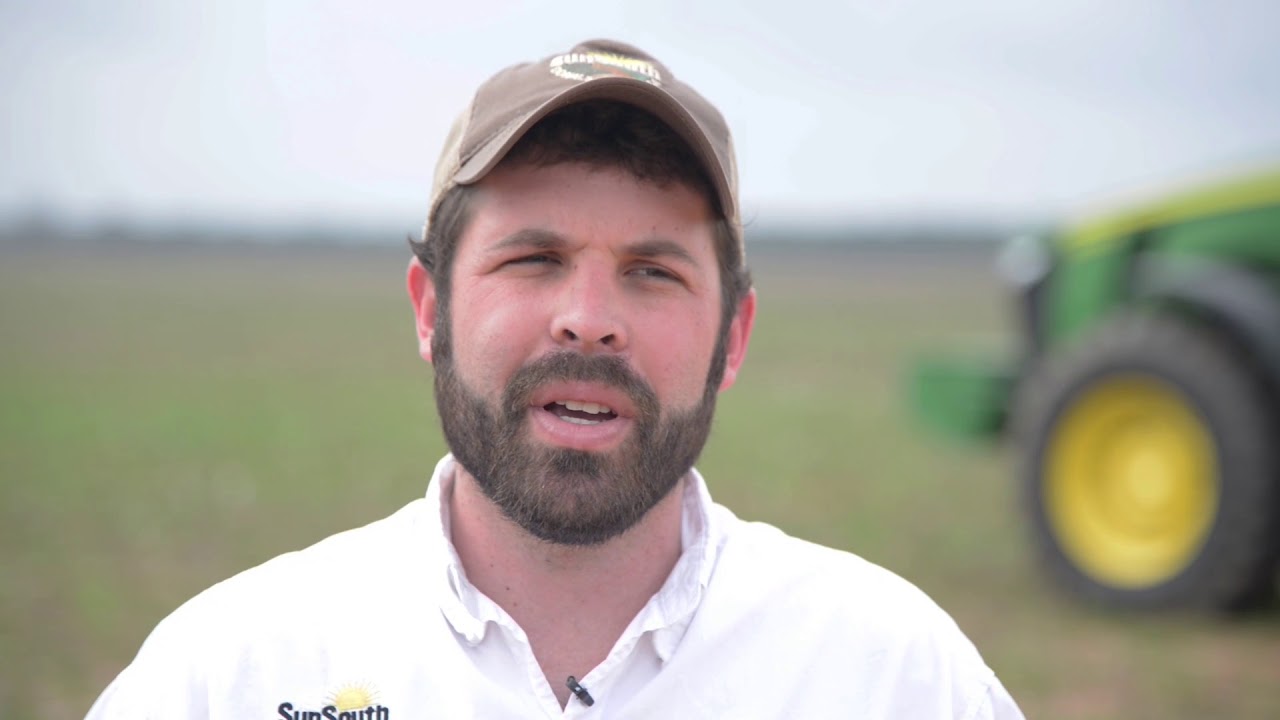
To advance his career, alumnus Russ Worsley first needed to advance his knowledge and expertise in precision agriculture. After earning his Auburn master's degree online, he was able to step up to the role of integrated solutions manager for SunSouth, where he oversees precision agriculture for the entire company.

In preparation for Ph.D. studies in earth or environmental sciences, alumnus Kyle Lesinger needed a master's program with a strong research focus. His graduate advisor at Auburn helped equip him with just the hands-on research experience he needed. And all from the convenience of home.

As part of her online master's program at Auburn, Melissa DeHart gained hands-on research experience by helping her community monitor and analyze potential contaminants in a local lake in her community.
Programs

We offer both thesis and non-thesis master’s degrees in crop, soil and environmental sciences. These graduate programs are designed for working professionals and may be earned completely online.

We also offer certificate courses, which do not require official admission to Auburn University. Certificate courses may not be applied toward an academic degree.
These online courses include a Certification for Aquaculture Professionals (CAP) and a Crop and Soil Science Certificate.
Know before applying ...
Minimum background courses
There are no background course requirements to be admitted into our online degree programs. However, in order to succeed it is suggested students have general background courses in the subjects listed below, and students lacking these courses may be required to take these courses prior to or following admission into their program.
NOTE: A student’s graduate committee may require additional courses.
No residency requirement
Auburn Agriculture Online master’s students are not required to come to campus. However, they are expected to interact on a regular basis with their major professor and graduate committee, and to participate in other ways in the department such as in seminars as well as online classes.
Time required
Although a Master’s degree in Crop, Soil and Environmental Sciences may take a full time student up to two years to complete, distance education students who do not take a full load will require more time. Those with scholastic deficiencies of any sort may also require additional time. Also, for those doing a Master of Science degree, research is unpredictable and frequently requires more time than anticipated.
Online courses
- ENVI 1010 - Intro To Environmental Science (1)
- CSES 2910 - Turfgrass: Uses and Care for Sports & Leisure (2)
- CSES 3150 - Turfgrass Management (4)
- CSES 6020 - Nutrient Management (3)
- CSES 6080 - Soil Resources & Conservation (4)
- CSES 6240 - Crop Physiology (3)
- CSES 6590 - Environmental Soil Physics (4)
- CSES 6960 - Special Problems (Variable)
- CSES 7100 - Aginformatics: Computational Thinking for Agri. (3)
- CSES 7540 - Principles of Plant Nutrition (3)
- CSES 7800 - Deep Learning for Environmental Sciences (3)
- CSES 7950 - Seminar (1)
- CSES 7990 - Research and Thesis (Variable)
- CSES 8580 - Fate & Transp of Chem in Soils (3)
- CSES 5/6000 - Environmental Quality (3)
- CSES 5/6030 - Advanced Crop Science (3)
- CSES 5/6060 - Soil Microbiology Lecture (3)
- CSES5/6160 - Advanced Turfgrass Management (3)
- CSES 5/6310 - Drone Policy and Compliance (3)
- CSES 5/6500 - Forage Production & Utilization (3)
- CSES 5/6800 - Climate, Water, and Life (3)
- CSES 5/6403 - Bioengery and the Environment (3)
- ENTM 2000 - Pests, Pathology, Parasites & People (3)
- ENTM 2040 - Introduction to Entomology (3)
- ENTM 6660 - Figure Fundamentals: Scientific Illustration (3)
- HORT 3000 - Growth and Development of Horticulture Plants (3)
- HORT 5/6150 - Retail Garden Center Management (3)
- HORT 6130 - Sustainable Vegetable Crop Production (3)
- HORT 6240 - Public Garden Management (3)
Frequently asked questions
Have a question about one of our distance education programs? You’ll probably find the answer here. If not, feel free to reach out to us any time at agonlinehelp@auburn.edu.
The M.S. is a thesis/research-based degree. The M.Ag. is a non-thesis option that replaces the thesis with an applied/special project or professional report (program requirements vary by area).
The master’s program is a 30-hour graduate degree. The graduate certificate option is 15 hours.
No campus visits are required for Auburn Agriculture Online master’s students. A small number of courses may require a short, scheduled in-person lab experience (this applies only to a limited set of courses).
Courses are asynchronous in Canvas, so you can log in and work around your schedule—while still meeting weekly/module deadlines and completing the course within the semester.
Lectures are typically delivered via streaming video. Labs may use recorded demonstrations, simulations, or other online methods; where hands-on experience is essential, a short in-person requirement may be used in limited cases.
Many courses require proctored exams. Proctoring may be in-person or remote, depending on the course and instructor, and is coordinated through Canvas/course guidance.
Applications are submitted through the Graduate School and typically include transcripts, three references, and a one-page statement of purpose describing your goals. Some applicants may be asked for additional documentation.
As a general planning target, application materials should be received at least 45 days before the first day of class for the intended semester (international applicants are often encouraged to submit earlier).
There are no mandatory background course requirements for admission into these online degree programs; however, prior coursework in relevant areas is recommended for success, and your graduate committee may require additional coursework if needed.

